Indication
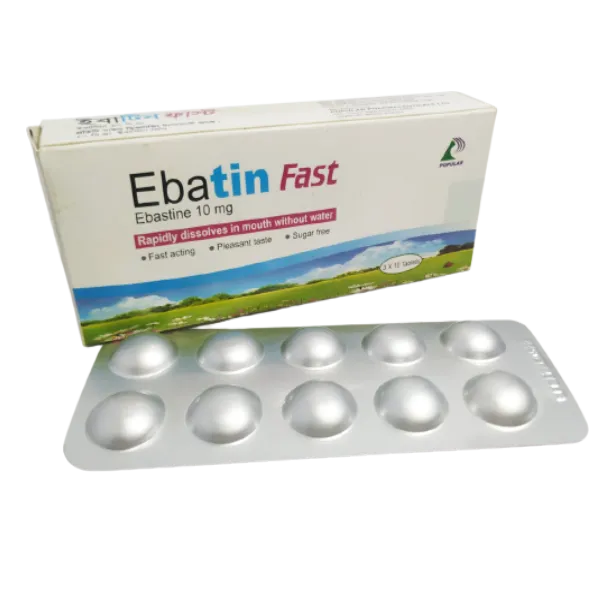
Ebastine is indicated for the symptomatic treatment of:
- Seasonal and perennial allergic rhinitis
- Chronic idiopathic urticaria
Dosage & Administration
- Children between 2 and 5 years: 2.5 ml once daily (up to 5 ml in severe cases such as perennial allergic rhinitis)
- Children between 6 and 11 years: 5 ml (one teaspoonful) once daily (up to 10 ml in severe cases such perennial allergic rhinitis)
- Adults and older children more than 11 years: - 1 tablet (10 mg) or 10 ml (two teaspoonfuls) once daily. Ebastine may be taken with or without food.
Precautions
It is advisable to exercise caution when using ebastine in patients known to have the following conditions: long QT syndrome, hypokalaemia, treatment with any medicine known to produce an increase in QT interval or inhibit CYP3A4 enzyme systems such as azole antifungals and macrolide antibiotics.
Use in Pregnancy and Lactation
As per pregnancy categorization guidelines of USFDA, ebastine can be categorized as pregnancy category B. Studies in rats and rabbits do not indicate any direct or indirect harmful effects with respect to the development of the embryo or foetus, or the course of gestation and peri-and post-natal development. No teratogenic effects have been identified in animals. However, there are no well-controlled studies in pregnant women and reproductive studies are not always predictive of human response. Therefore, ebastine should be used during pregnancy only if clearly needed. It is not known whether ebastine is excreted in human milk,